
During the recent India-Pakistan conflict, India showed its military strength by precisely targeting and destroying terrorist camps inside Pakistan.
After the strikes, both countries agreed to a ceasefire. While Pakistan claims it successfully defended itself, India’s quick and planned response is widely seen as a strong step in its fight against terrorism. Many experts believe this action highlighted India’s clear stand against cross-border terror and sent a powerful message globally.
What Happened at the Border?
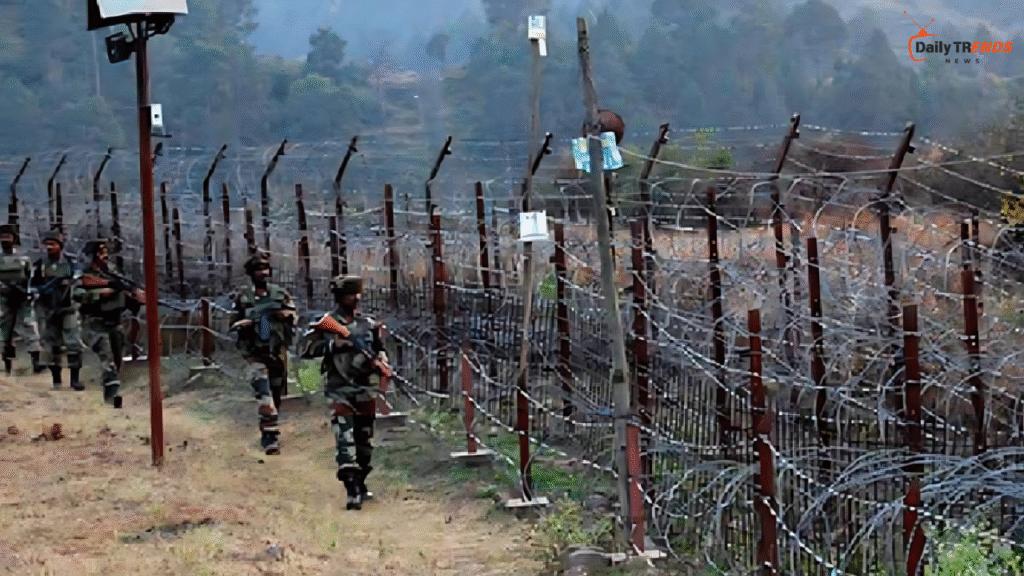
On April 22, Pakistan-backed terrorists brutally killed 26 Hindu male tourists in the Pahalgam region of Kashmir, sparking nationwide outrage. In a strong retaliation, India launched targeted airstrikes on May 7, destroying 9 terror sites operating on Pakistani soil. Following this, clashes intensified along the border. Blackouts were enforced in the border regions of the states of Jammu, Punjab, and Rajasthan for security reasons.
India’s defense systems successfully intercepted all incoming missiles from Pakistan, while Indian strikes remained focused on military and terrorist infrastructure. In contrast, Pakistan resorted to cowardly tactics by targeting civilians. On May 9, Pakistani shelling in Poonch killed 15 civilians and injured at least 43 others during an attack on residential areas. India’s response has been widely seen as a firm message against terrorism, reinforcing its commitment to national security while exposing Pakistan’s continued support for violent extremist groups. Tensions remain high as both sides monitor the situation closely.
How Did India and Pakistan React to the Ceasefire?
On May 10, U.S. President Donald Trump claimed he played a key role in mediating ceasefire talks between India and Pakistan. After continuing tensions amid India Pakistan conflict, however, the Indian Ministry of External Affairs clarified that the decision to initiate peace talks was made independently by both nations, without any external intervention. According to official reports, Pakistan’s Director General of Military Operations (DGMO) called his Indian counterpart at 3:35 PM to propose a ceasefire and discuss de-escalation. While the Pakistani Prime Minister publicly thanked President Trump for his “leadership,” India maintained that the talks were purely bilateral.
Meanwhile, both countries continue to claim victory.
Global Media Coverage on the India-Pakistan Conflict
The recent India-Pakistan conflict has gained extensive global media coverage, with varying perspectives on the sequence of events and the roles played by each nation.
CNN reported that India initiated the ongoing India-Pakistan conflict by launching airstrikes targeting what it identified as terrorist infrastructure in Pakistan, following a deadly attack in Kashmir that killed 26 Indian tourists. Pakistan responded with retaliatory drone strikes, escalating the confrontation.
The Financial Times described the situation as the most serious confrontation between the two nuclear-armed neighbors in decades, noting that both nations claimed victory following the ceasefire after the escalating India-Pakistan conflict
The Guardian highlighted India’s decision to block social media accounts of Chinese and Turkish state media, accusing them of spreading Pakistani propaganda during the conflict.
Reuters detailed how India and Pakistan pulled back from the brink with a U.S.-brokered ceasefire, emphasizing the role of international diplomacy in de-escalating the situation.
Overall, global media highlighted how tense the situation was, how it could have gotten worse, and how important it is for both countries to keep talking and working toward peace.
Reactions from Major Countries
The India-Pakistan conflict drew a wide range of reactions from countries around the world, each reflecting their own perspectives and interests in the region.
United States
President Donald Trump said that the India-Pakistan conflict has been settled and credited U.S. efforts for helping both countries choose trade over war. Later, he softened his statement, saying, “I don’t wanna say I did it, but I helped,” showing that the U.S. played a behind-the-scenes role in the peace talks.
United Kingdom
The UK expressed concern over the rising tensions and asked both India and Pakistan to stay calm, avoid further violence, and solve the issue through peaceful talks to protect civilians and bring back stability.
Russia
Russia offered to help and sort out the differences that escalated due to the recent India-Pakistan conflict over Kashmir. It also called for calm and strongly spoke out against all kinds of terrorism.
China
China had a mixed reaction. It was reportedly unhappy with how Pakistan handled the ceasefire talks. At the same time, China used the India-Pakistan conflict to test the military weapons it had given to Pakistan, which raised worries about its true intentions in the region.
India-Pakistan Conflict from the Lens of International Diplomacy
International diplomacy was crucial in managing the recent India-Pakistan conflict and preventing it from escalating into a larger conflict. The United States, under President Trump, claimed to have played an important role in resolving the India-Pakistan Conflict, encouraging both nations to seek peace and focus on dialogue rather than war. Behind the scenes, military leaders from both sides maintained communication, which helped pave the way for the ceasefire agreement.
Other major countries like the United Kingdom, Russia, and China urged both India and Pakistan to exercise restraint and avoid further violence. Russia even offered to help mediate the dispute, while China emphasized the need for calm despite its complex regional interests. The widespread global media coverage and international pressure also pushed both countries toward reducing tensions. Altogether, these diplomatic efforts helped shift the situation from active conflict to cautious peace, highlighting the importance of dialogue and cooperation in maintaining regional stability.
You may also like to read-
- Is China supporting Pakistan-backed terrorist attacks in Pahalgam?
- India-Pakistan agree to ceasefire: Foreign Secretary
Thanks for reading!
4 thoughts on “India Pakistan Conflict: A Global View”